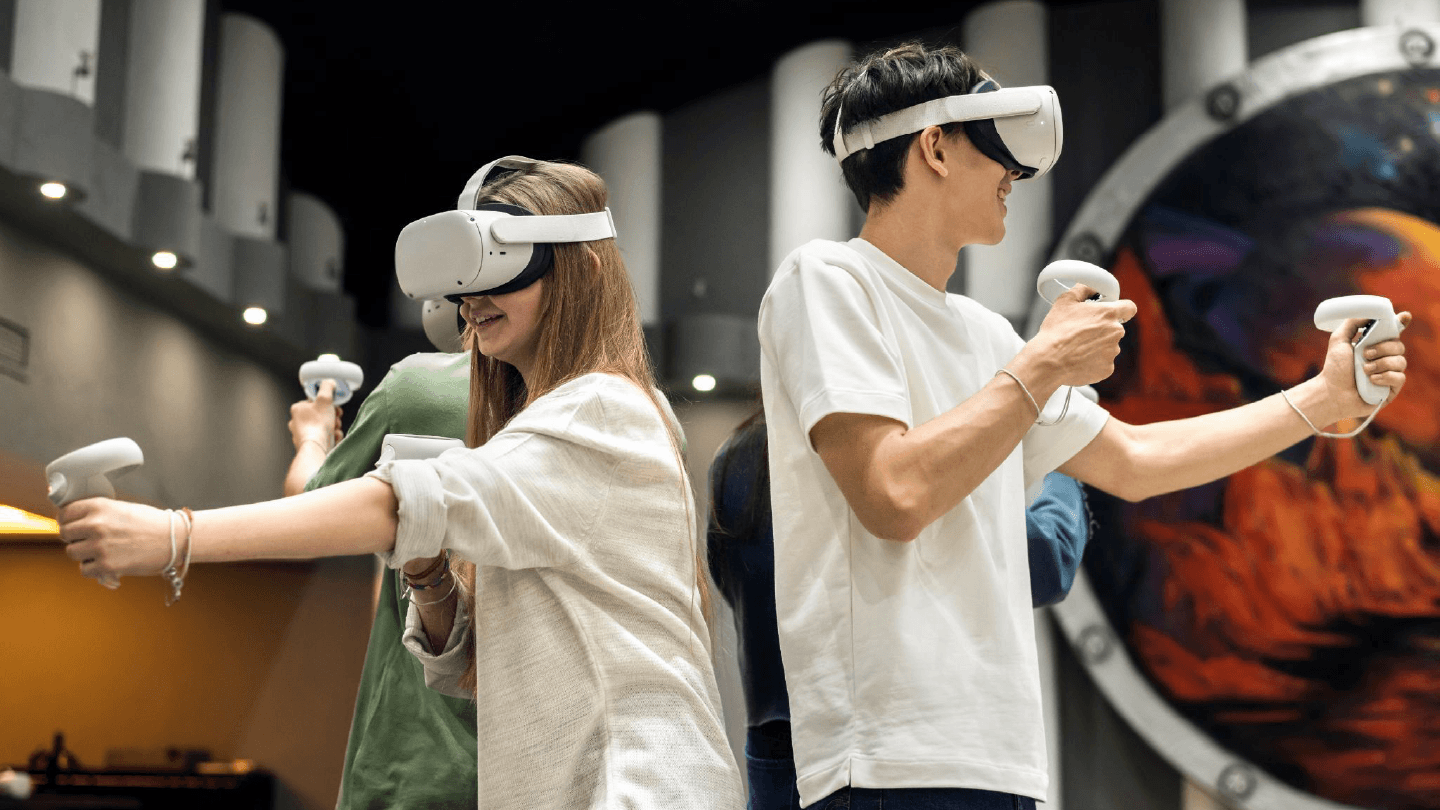
Using visual research frameworks to shape the future of immersive digital experiences
Overview
As virtual reality evolved from a gaming platform into a social ecosystem, one of the world's leading technology companies sought to better understand how people build trust, express identity, and navigate conflict in immersive environments. Over the course of a four-year mixed-method research partnership, AnswerLab worked alongside the client to explore a fundamental question:
“What makes people feel safe, empowered, and authentically represented in social VR?”
As the lead creative supporting the research program, I partnered with researchers and client stakeholders to transform complex behavioral data into visual frameworks that guided product strategy. Through journey maps, decision models, motivational frameworks, workshop facilitation, and research synthesis, I helped translate thousands of qualitative and quantitative insights into actionable design principles that ultimately informed quality-of-life features now widely adopted across the social VR industry.
The Challenge
Social VR introduced entirely new questions about human behavior. Unlike traditional gaming environments, these spaces required users to continuously negotiate identity, personal boundaries, social interaction, and safety.
The client needed to understand:
What creates a positive social VR experience?
How does personalization influence belonging?
What unique challenges do women encounter in immersive environments?
How do users respond to harassment or unwanted interactions?
Which safety tools feel intuitive—and which are ignored?
Rather than answering these questions through a single study, AnswerLab designed a longitudinal research program that combined qualitative and quantitative methods over several years. As the embedded creative partner throughout the engagement, I collaborated closely with research teams and client stakeholders to make complex behavioral insights visible, understandable, and actionable.
My responsibilities included:
Designing visual frameworks that synthesized large-scale qualitative and quantitative research.
Creating journey maps illustrating end-to-end user experiences across immersive environments.
Developing decision-tree models that visualized conflict resolution behaviors.
Designing motivational principle cards that enabled researchers and stakeholders to compare behavioral priorities during workshops.
Facilitating collaborative working sessions through real-time visualization.
Producing research artifacts that supported ongoing product strategy discussions across multiple phases of the engagement.
Creating the final synthesis video that distilled four years of research into a cohesive narrative for executive stakeholders.

Our Approach
Transitioning Data to Design Principles
The research sought to understand the emotional architecture of social interaction within virtual environments. Using in-depth interviews, diary studies, and large-scale quantitative surveys, the team examined how users experienced identity, belonging, personalization, trust, and safety. One recurring theme consistently emerged: People wanted to feel recognized before they wanted to feel entertained.
This is best defined as the ability to customize identity, express individuality, and feel genuinely represented became foundational to positive experiences within social VR. My role was to help transform these abstract emotional concepts into visual systems that teams could evaluate, discuss, and prioritize together.
01
Capturing Motivations
One of the most distinctive contributions to the program was the development of Motivational Principle Cards.
Rather than organizing participants into static personas, we created a deck of behavioral principles represented through collectible, card-inspired visuals. Each card represented a core motivational value such as feeling seen, maintaining autonomy, or expressing identity, and could be compared, ranked, and debated during collaborative workshops.
The system encouraged product teams to think less about demographic categories and more about the psychological drivers influencing user behavior. These visual tools became a shared language between researchers, designers, and stakeholders, helping transform qualitative observations into product priorities.
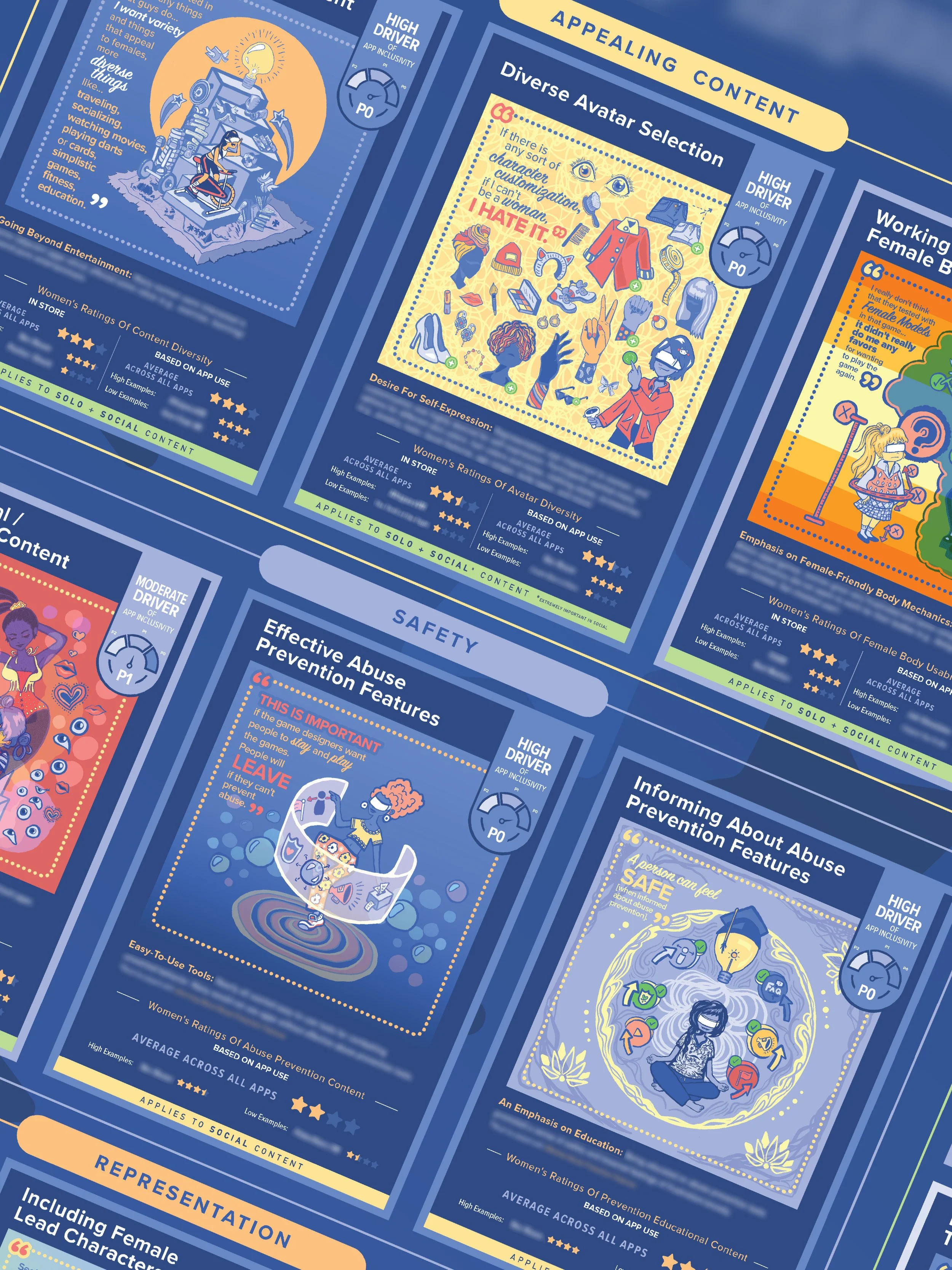
Cards were categorized by theme and then measured by inclusivity drivers.
02
Mapping Core Decision Making
As the research expanded, we began examining how users navigated conflict within social VR. Questions that emerged included, would people rely on built-in moderation features, would they create their own social norms, and would they avoid confrontation altogether?
To answer these questions, I designed decision-tree frameworks that visualized the paths users followed when navigating difficult interactions.
Rather than presenting isolated findings, these diagrams revealed behavioral patterns across multiple scenarios, helping stakeholders identify where platform interventions could most effectively support users.
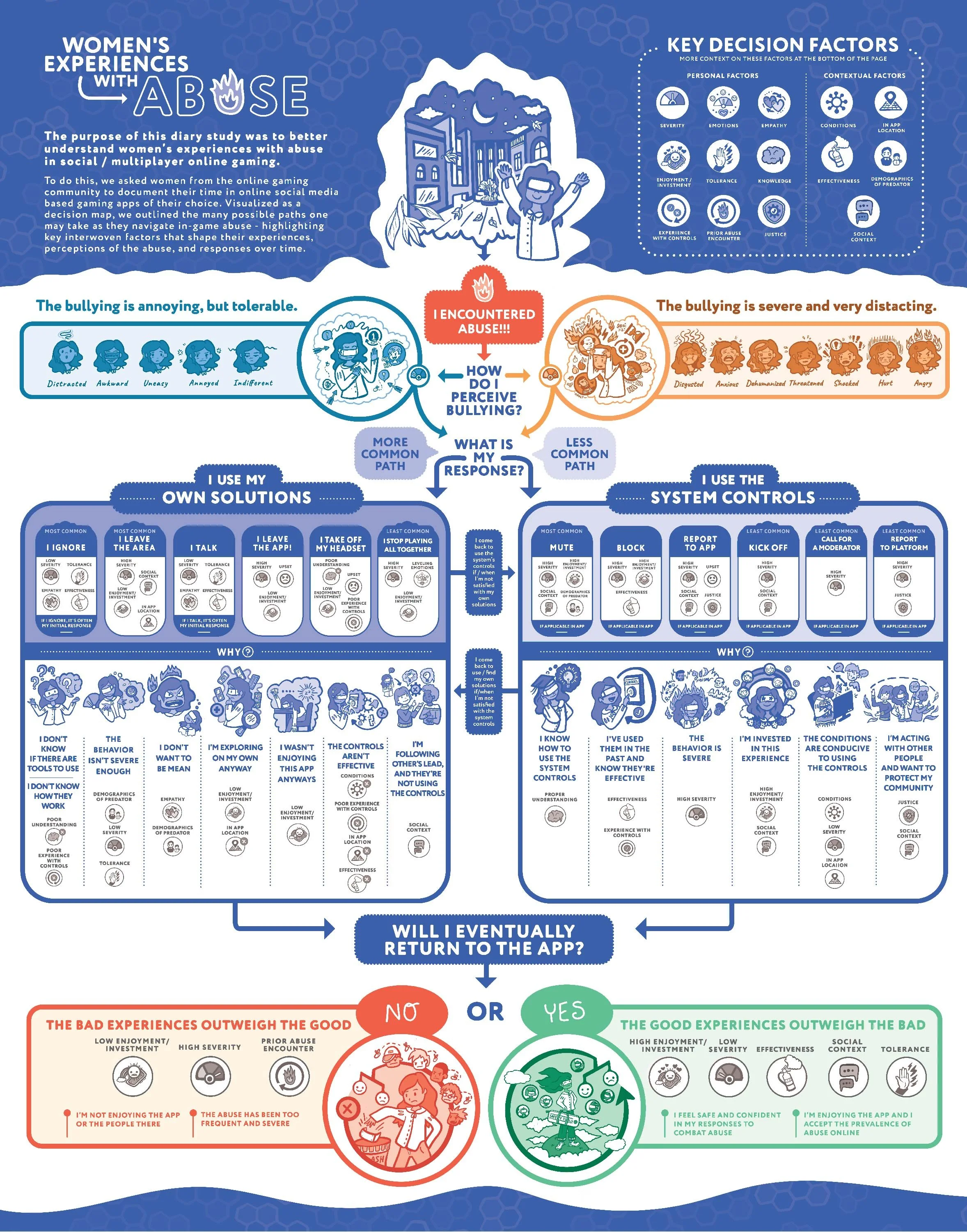
Mapping decision-making in the virtual social space.
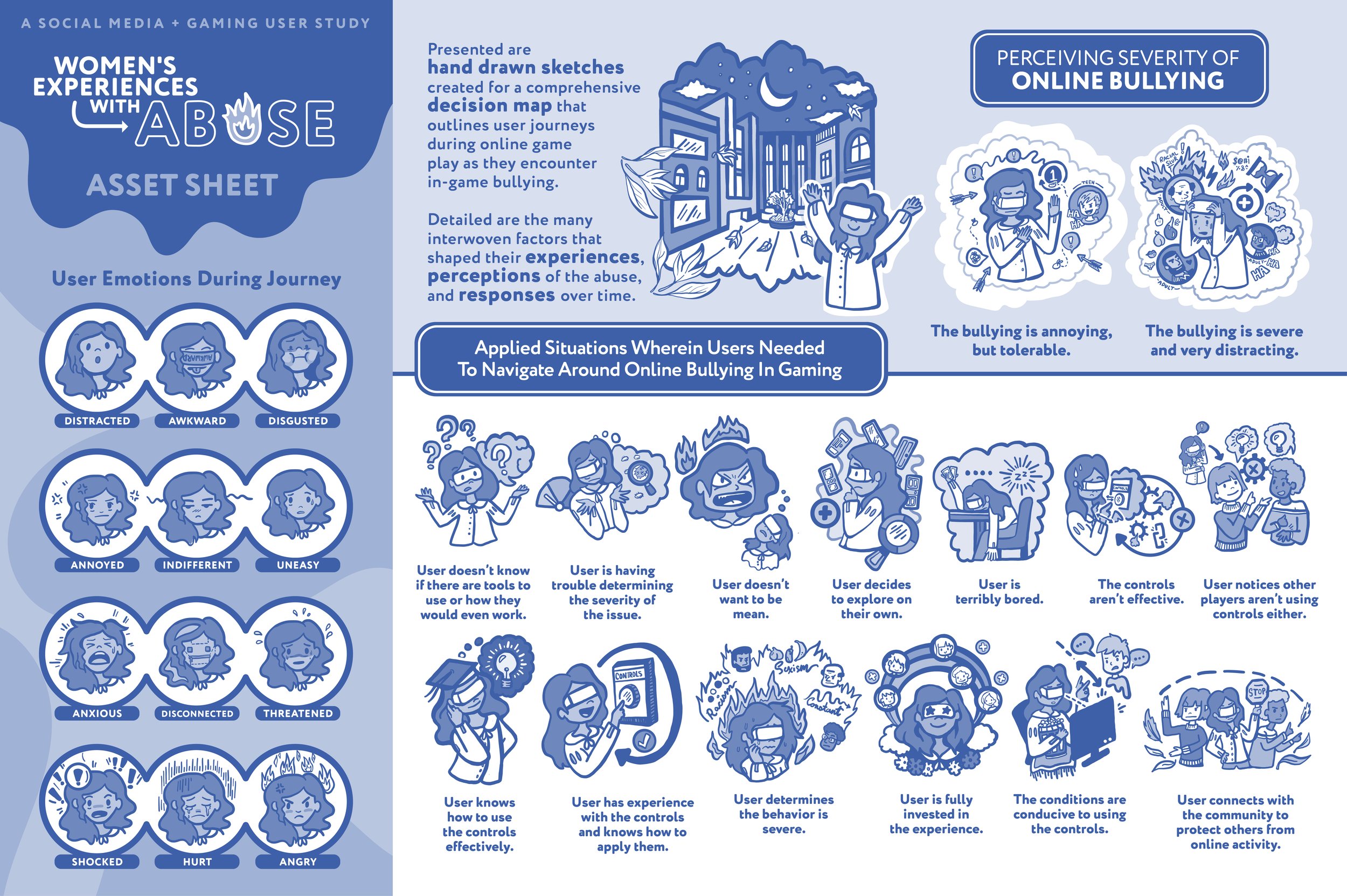
When users encounter abuse, what do their responses look like and why?
Results
Four years of embedded partnership and continuous research turned evolving user needs into foundational principles that shaped the future direction of social VR product design.
Because the engagement evolved over four years, every phase of research informed the next. Visual frameworks developed early in the program became living tools that evolved alongside new research questions. By maintaining continuity across studies, the client was able to build an increasingly sophisticated understanding of how user needs shifted as social VR matured.
The long-term partnership also fostered a high level of trust between AnswerLab and the client, enabling collaborative workshops where visualization became an active part of strategic decision-making rather than simply a means of presenting final results. The research program established foundational principles that influenced the future direction of social VR product design.
Skills Demonstrated
Research Visualization
Creative Strategy
Information Design
Mixed-Methods Research
Journey Mapping
Decision Modeling
Workshop Facilitation
Systems Thinking
Behavioral Framework Design
Human-Centered Design
Longitudinal Research
Product Strategy
Data Storytelling
Executive Communication
Cross-Functional Collaboration
Featured Articles & Research
AnswerLab Case Study Using Quantitative Research to Shape Future Game Development Strategy
AnswerLab Insights Gaming UX Research: 5 Lessons to Level-up User Experiences Across Industries
Entertainment Software Association (ESA) 2024 Essential Facts About the U.S. Video Game Industry